Paint protection film is the most effective physical barrier you can put between your car’s paint and the road. But how exactly does it work, and what does it actually protect against? This guide breaks down the science and practical benefits of PPF. Zenith PPF in Cumming, GA installs paint protection film for Atlanta-area drivers. Contact us for a free consultation.
What Is Paint Protection Film?
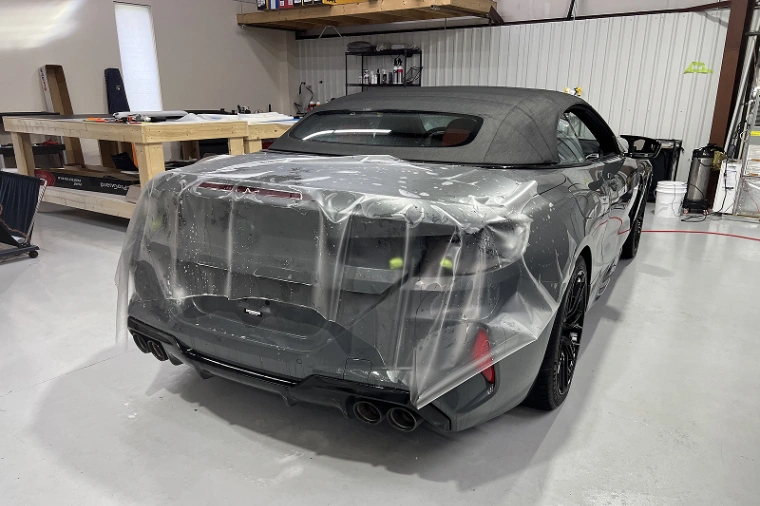
Paint protection film (PPF), also called clear bra or clear paint film, is a thermoplastic urethane film applied to the exterior painted surfaces of a vehicle. It was originally developed for military use on helicopter rotor blades and leading-edge armor before the automotive aftermarket adopted it in the 1990s. Modern PPF is optically clear, highly durable, and available in glossy and matte finishes. When installed correctly, it is virtually invisible.
How Does PPF Protect Against Rock Chips?
When a rock strikes an unprotected car at highway speed, all of that kinetic energy concentrates at a single contact point on your clear coat, causing it to chip or delaminate. PPF changes this equation. The urethane film is flexible, absorbing and dispersing impact energy across a wider area. It is also elastic, deforming on impact rather than cracking. And it is resilient, returning to its original shape after minor impacts. The energy of a rock strike is spread over a much larger surface area and absorbed by the film rather than transferred to your paint.
The Self-Healing Property of Premium PPF
The top coat of quality PPF films is formulated with elastomeric polymers that respond to heat from the sun, warm water, or a heat gun to flow back into their original flat configuration after minor scratches. Light surface scratches from fingernails or fine debris that would normally leave a mark simply disappear on a self-healing film within minutes to hours depending on temperature. Note: self-healing works for surface-level abrasions. A deep scratch from a key or sharp rock can still damage the film.
What Else Does PPF Protect Against?
Beyond rock chips, quality PPF protects against: bug splatter and bird droppings (highly acidic, especially dangerous in Georgia’s heat where chemical reactions accelerate), tree sap (prevents bonding directly to your clear coat), UV rays (quality film contains UV inhibitors that protect paint from fading and oxidation), and environmental fallout including industrial pollution and brake dust particles.
Is PPF Worth It for a New Car?
Yes, and applying it immediately on a new car is the ideal scenario. When you apply PPF to a new car with no existing damage, you lock in perfect paint from day one. The film preserves that condition for the life of the installation, typically 7 to 10 years on premium films. For anyone buying a new vehicle worth $35,000 or more, PPF on at least the front end is a straightforward financial decision. Rock chips can start appearing within the first week of ownership on Georgia roads.
Frequently Asked Questions
How long does paint protection film last? Premium PPF films last 7 to 10 years under normal conditions. Factors that reduce lifespan include improper installation, inadequate prep, UV exposure without top coating, and maintenance neglect.
Can PPF be removed? Yes. Quality PPF is designed to be removed without damaging the paint beneath, which is one of its key advantages. Professional removal is recommended to avoid adhesive residue issues.
What is the difference between PPF and vinyl wrap? PPF is an optically clear protective film designed for paint protection. Vinyl wrap is a pigmented film designed primarily for color change and aesthetics. Vinyl offers minimal impact protection compared to PPF’s urethane construction.
Zenith PPF is located in Cumming, GA, providing paint protection film, ceramic coating, and windshield protection for drivers throughout the Atlanta metro area. Contact us for a free, no-obligation consultation.