Rock chips on Georgia highways are nearly unavoidable. Whether you are on GA-400 or I-285, loose gravel and road debris hit windshields at speed, and a chip that goes untreated can spread into a crack that costs $300 – $600 to replace. Windshield PPF is designed to stop that from happening. Here is everything you need to know before deciding if it is right for your vehicle.
What Is Windshield PPF?
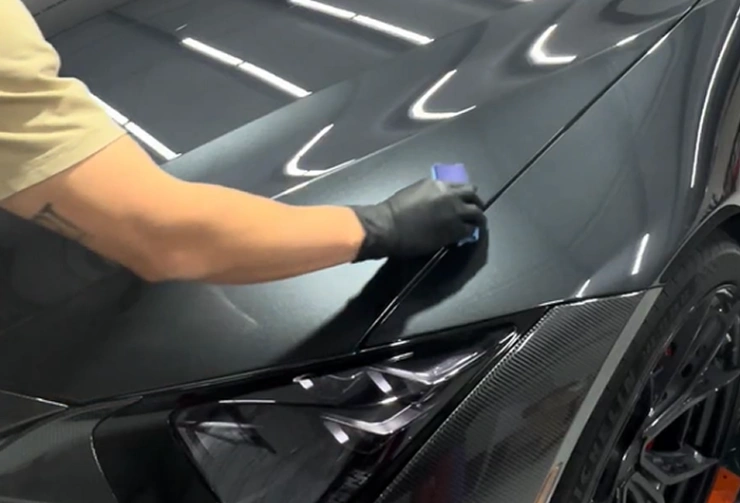
Windshield paint protection film is an optically clear urethane film applied directly to the outside of your windshield. It uses the same technology as body panel PPF but is formulated for glass. The film absorbs the energy of rock chip impacts and prevents them from cracking or chipping the glass beneath. On premium films, the urethane top coat has self-healing properties that allow minor surface scratches to disappear with heat exposure.
How Does Windshield PPF Work?
Windshield PPF works through energy dispersion. When a rock strikes an unprotected windshield at highway speed, all of that kinetic energy concentrates at a single point, causing a star break or bullseye chip. The film adds a sacrificial layer that absorbs and disperses that energy across a wider area, reducing the force at any single point below the threshold needed to crack the glass. The film will not make your windshield indestructible, but it dramatically reduces the number and severity of chips from typical road debris.
Is Windshield PPF Worth It for Georgia Drivers?
For most drivers in North Georgia and metro Atlanta, yes. Consider the cost comparison: windshield PPF installation runs $300 – $600 as a one-time cost and lasts 3 to 5 years. A single chip repair costs $75 – $150 and only works if caught early. A full windshield replacement costs $300 – $600+ on a standard vehicle, and over $1,500 on ADAS-equipped or luxury vehicles with heated or acoustic glass. If you accumulate two or more chips in a year, which is extremely common on Georgia highways, windshield PPF pays for itself quickly.
Drivers who benefit most: highway commuters on GA-400 or I-285, anyone who regularly follows trucks or drives through construction zones, owners of luxury or exotic vehicles with expensive OEM glass, and anyone who has already replaced a windshield and wants to avoid doing it again.
How Long Does Windshield PPF Last?
Most quality windshield films last 3 to 5 years before they begin to show haze, edge lifting, or yellowing. This is shorter than body panel PPF because windshields are subjected to wiper blade friction, UV concentration, and temperature cycling more intensely than most painted surfaces. When it is time to replace the film, it peels off cleanly without damaging the glass and you simply apply a fresh layer.
Frequently Asked Questions About Windshield PPF
Does windshield PPF affect visibility? No. Optical-grade windshield film is completely clear when properly installed. There is no visible tint, haze, or distortion.
Does windshield PPF work with rain-sensing wipers and ADAS cameras? In most cases, yes, but it depends on the installation. Rain sensors and ADAS cameras require an optically clear zone on the glass. A professional installer will ensure the film is cut to avoid those sensor areas. Always confirm with your installer that they account for your specific vehicle’s sensor placement.
Can windshield PPF be applied over existing chips? It is not recommended. Existing chips should be repaired first. Film applied over a chip will not fix the structural damage, and the chip may still spread.
Zenith PPF is located in Cumming, GA, serving Atlanta-area drivers in Alpharetta, Johns Creek, Milton, Roswell, Dawsonville, and surrounding communities. Contact us for a free windshield protection consultation.